Recent Comments

Sunday, March 15, 2009

2003

In November 2003, Ben and Adam Laurie from A.L. Digital Ltd. discovered that serious flaws in Bluetooth security may lead to disclosure of personal data.[26] It should be noted, however, that the reported security problems concerned some poor implementations of Bluetooth, rather than the protocol itself.

In a subsequent experiment, Martin Herfurt from the trifinite.group was able to do a field-trial at the CeBIT fairgrounds, showing the importance of the problem to the world. A new attack called BlueBug was used for this experiment.[27] This is one of a number of concerns that have been raised over the security of Bluetooth communications.

2004

In 2004 the first purported virus using Bluetooth to spread itself among mobile phones appeared on the Symbian OS.[28] The virus was first described by Kaspersky Lab and requires users to confirm the installation of unknown software before it can propagate. The virus was written as a proof-of-concept by a group of virus writers known as "29A" and sent to anti-virus groups. Thus, it should be regarded as a potential (but not real) security threat to Bluetooth or Symbian OS since the virus has never spread in the wild.

In August 2004, a world-record-setting experiment (see also Bluetooth sniping) showed that the range of Class 2 Bluetooth radios could be extended to 1.78 km (1.08 mile) with directional antennas and signal amplifiers.[29] This poses a potential security threat because it enables attackers to access vulnerable Bluetooth-devices from a distance beyond expectation. The attacker must also be able to receive information from the victim to set up a connection. No attack can be made against a Bluetooth device unless the attacker knows its Bluetooth address and which channels to transmit on.

2005

In January 2005, a mobile malware worm known as Lasco.A began targeting mobile phones using Symbian OS (Series 60 platform) using Bluetooth-enabled devices to replicate itself and spread to other devices. The worm is self-installing and begins once the mobile user approves the transfer of the file (velasco.sis ) from another device. Once installed, the worm begins looking for other Bluetooth-enabled devices to infect. Additionally, the worm infects other .SIS files on the device, allowing replication to another device through use of removable media (Secure Digital, Compact Flash, etc.). The worm can render the mobile device unstable.[30]

In April 2005, Cambridge University security researchers published results of their actual implementation of passive attacks against the PIN-based pairing between commercial Bluetooth devices, confirming the attacks to be practicably fast and the Bluetooth symmetric key establishment method to be vulnerable. To rectify this vulnerability, they carried out an implementation which showed that stronger, asymmetric key establishment is feasible for certain classes of devices, such as mobile phones.[31]

In June 2005, Yaniv Shaked and Avishai Wool published a paper describing both passive and active methods for obtaining the PIN for a Bluetooth link. The passive attack allows a suitably equipped attacker to eavesdrop on communications and spoof, if the attacker was present at the time of initial pairing. The active method makes use of a specially constructed message that must be inserted at a specific point in the protocol, to make the master and slave repeat the pairing process. After that, the first method can be used to crack the PIN. This attack's major weakness is that it requires the user of the devices under attack to re-enter the PIN during the attack when the device prompts them to. Also, this active attack probably requires custom hardware, since most commercially available Bluetooth devices are not capable of the timing necessary.[32]

In August 2005, police in Cambridgeshire, England, issued warnings about thieves using Bluetooth-enabled phones to track other devices left in cars. Police are advising users to ensure that any mobile networking connections are de-activated if laptops and other devices are left in this way.[33]

2006

In April 2006, researchers from Secure Network and F-Secure published a report that warns of the large number of devices left in a visible state, and issued statistics on the spread of various Bluetooth services and the ease of spread of an eventual Bluetooth worm.

2007

In October 2007, at the Luxemburgish Hack.lu Security Conference, Kevin Finistere and Thierry Zoller demonstrated and released a remote root shell via Bluetooth on Mac OS X v10.3.9 and v10.4. They also demonstrated the first Bluetooth PIN and Linkkeys cracker, which is based on the research of Wool and Shaked.

Health concerns

Main article: Wireless electronic devices and health

Bluetooth uses the microwave radio frequency spectrum in the 2.4 GHz to 2.4835 GHz range. Maximum power output from a Bluetooth radio is 100 mW, 2.5 mW, and 1 mW for Class 1, Class 2, and Class 3 devices respectively, which puts Class 1 at roughly the same level as mobile phones, and the other two classes much lower.[35] Accordingly, Class 2 and Class 3 Bluetooth devices are considered less of a potential hazard than mobile phones, and Class 1 may be comparable to that of mobile phones

Code division multiple access (CDMA)

Code division multiple access (CDMA) is a channel access method utilized by various radio communication technologies. It should not be confused with the mobile phone standards called cdmaOne and CDMA2000 (which are often referred to as simply "CDMA"), this uses CDMA as an underlying channel access method.

One of the basic concepts in data communication is the idea of allowing several transmitters to send information simultaneously over a single communication channel. This allows several users to share a bandwidth of frequencies. This concept is called multiplexing. CDMA employs spread-spectrum technology and a special coding scheme (where each transmitter is assigned a code) to allow multiple users to be multiplexed over the same physical channel. By contrast, time division multiple access (TDMA) divides access by time, while frequency-division multiple access (FDMA) divides it by frequency. CDMA is a form of "spread-spectrum" signaling, since the modulated coded signal has a much higher data bandwidth than the data being communicated.

An analogy to the problem of multiple access is a room (channel) in which people wish to communicate with each other. To avoid confusion, people could take turns speaking (time division), speak at different pitches (frequency division), or speak in different languages (code division). CDMA is analogous to the last example where people speaking the same language can understand each other, but not other people. Similarly, in radio CDMA, each group of users is given a shared code. Many codes occupy the same channel, but only users associated with a particular code can understand each other.

Uses

* One of the early applications for code division multiplexing—predating, and distinct from cdmaOne—is in GPS.

* The Qualcomm standard IS-95, marketed as cdmaOne.

* The Qualcomm standard IS-2000, known as CDMA2000. This standard is used by several mobile phone companies, including the Globalstar satellite phone network.

* CDMA has been used in the OmniTRACS satellite system for transportation logistics.

Steps in CDMA Modulation

CDMA is a spread spectrum multiple access[1] technique. A spread spectrum technique is one which spreads the bandwidth of the data uniformly for the same transmitted power. Spreading code is a pseudo-random code which has a narrow Ambiguity function unlike other narrow pulse codes. In CDMA a locally generated code runs at a much higher rate than the data to be transmitted. Data for transmission is simply logically XOR (exclusive OR) added with the faster code. The figure shows how spread spectrum signal is generated. The data signal with pulse duration of Tb is XOR added with the code signal with pulse duration of Tc. (Note: bandwidth is proportional to 1 / T where T = bit time) Therefore, the bandwidth of the data signal is 1 / Tb and the bandwidth of the spread spectrum signal is 1 / Tc. Since Tc is much smaller than Tb, the bandwidth of the spread spectrum signal is much larger than the bandwidth of the original signal. The ratio Tb / Tc is called spreading factor or processing gain and determines to certain extent the upper limit of total number of users supported simultaneously by a base station[2]Generation of a CDMA signalEach user in a CDMA system uses a different code to modulate their signal. Choosing the codes used to modulate the signal is very important in the performance of CDMA systems. The best performance will occur when there is good separation between the signal of a desired user and the signals of other users. The separation of the signals is made by correlating the received signal with the locally generated code of the desired user. If the signal matches the desired user's code then the correlation function will be high and the system can extract that signal. If the desired user's code has nothing in common with the signal the correlation should be as close to zero as possible (thus eliminating the signal); this is referred to as cross correlation. If the code is correlated with the signal at any time offset other than zero, the correlation should be as close to zero as possible. This is referred to as auto-correlation and is used to reject multi-path interference. [3]

In general, CDMA belongs to two basic categories: synchronous (orthogonal codes) and asynchronous (pseudorandom codes).

Code Division Multiplexing (Synchronous CDMA)

Synchronous CDMA exploits mathematical properties of orthogonality between vectors representing the data strings. For example, binary string "1011" is represented by the vector (1, 0, 1, 1). Vectors can be multiplied by taking their dot product, by summing the products of their respective components. If the dot product is zero, the two vectors are said to be orthogonal to each other. (Note: If u=(a,b) and v=(c,d), the dot product u.v = a*c + b*d) Some properties of the dot product help to understand how W-CDMA works. If vectors a and b are orthogonal, then
\mathbf{a}\cdot(\mathbf{a}+\mathbf{b})=||\mathbf{a}||^2\quad\mathrm{since}\quad\mathbf{a}\cdot\mathbf{a}+\mathbf{a}\cdot\mathbf{b}= ||a||^2+0,
\mathbf{a}\cdot(-\mathbf{a}+\mathbf{b})=-||\mathbf{a}||^2\quad\mathrm{since}\quad-\mathbf{a}\cdot\mathbf{a}+\mathbf{a}\cdot\mathbf{b}= -||a||^2+0,
\mathbf{b}\cdot(\mathbf{a}+\mathbf{b})=||\mathbf{b}||^2\quad\mathrm{since}\quad\mathbf{b}\cdot\mathbf{a}+\mathbf{b}\cdot\mathbf{b}= 0+||b||^2,
\mathbf{b}\cdot(\mathbf{a}-\mathbf{b})=-||\mathbf{b}||^2\quad\mathrm{since}\quad\mathbf{b}\cdot\mathbf{a}-\mathbf{b}\cdot\mathbf{b}=0 -||b||^2.

Each user in synchronous CDMA uses an orthogonal codes to modulate their signal. An example of four mutually orthogonal digital signals is shown in the figure. Orthogonal codes have a cross-correlation equal to zero; in other words, they do not interfere with each other. In the case of IS-95 64 bit Walsh codes are used to encode the signal to separate different users. Since each of the 64 Walsh codes are orthogonal to one another, the signals are channelized into 64 orthogonal signals. The following example demonstrates how each users signal can be encoded and decoded.

Example


Start with a set of vectors that are mutually orthogonal. (Although mutual orthogonality is the only condition, these vectors are usually constructed for ease of decoding, for example columns or rows from Walsh matrices.) An example of orthogonal functions is shown in the picture on the left. These vectors will be assigned to individual users and are called the "code", "chipping code" or "chip code". In the interest of brevity, the rest of this example uses codes (v) with only 2 digits.
An example of four mutually orthogonal digital signals.

Each user is associated with a different code, say v. If the data to be transmitted is a digital zero, then the actual bits transmitted will be –v, and if the data to be transmitted is a digital one, then the actual bits transmitted will be v. For example, if v=(1,–1), and the data that the user wishes to transmit is (1, 0, 1, 1) this would correspond to (v, –v, v, v) which is then constructed in binary as ((1,–1),(–1,1),(1,–1),(1,–1)). For the purposes of this article, we call this constructed vector the transmitted vector.

Each sender has a different, unique vector v chosen from that set, but the construction method of the transmitted vector is identical.

Now, due to physical properties of interference, if two signals at a point are in phase, they add to give twice the amplitude of each signal, but if they are out of phase, they "subtract" and give a signal that is the difference of the amplitudes. Digitally, this behaviour can be modelled by the addition of the transmission vectors, component by component.

If sender0 has code (1,–1) and data (1,0,1,1), and sender1 has code (1,1) and data (0,0,1,1), and both senders transmit simultaneously, then this table describes the coding steps:
Encode sender0
Because signal0 and signal1 are transmitted at the same time into the air, they add to produce the raw signal:
(1,–1,–1,1,1,–1,1,–1) + (–1,–1,–1,–1,1,1,1,1) = (0,–2,–2,0,2,0,2,0)

This raw signal is called an interference pattern. The receiver then extracts an intelligible signal for any known sender by combining the sender's code with the interference pattern, the receiver combines it with the codes of the senders. The following table explains how this works and shows that the signals do not interfer with one another:
decode1=pattern.vector1
When the receiver attempts to decode the signal using sender1’s code, the data is all zeros, therefore the cross correlation is equal to zero and it is clear that sender1 did not transmit any data.

Asynchronous CDMA

ee also: Direct-sequence spread spectrum

The previous example of orthogonal Walsh sequences describes how 2 users can be multiplexed together in a synchronous system, a technique that is commonly referred to as Code Division Multiplexing (CDM). The set of 4 Walsh sequences shown in the figure will afford up to 4 users, and in general, an NxN Walsh matrix can be used to multiplex N users. Multiplexing requires all of the users to be coordinated so that each transmits their assigned sequence v (or the complement, -v) starting at exactly the same time. Thus, this technique finds use in base-to-mobile links, where all of the transmissions originate from the same transmitter and can be perfectly coordinated.

On the other hand, the mobile-to-base links cannot be precisely coordinated, particularly due to the mobility of the handsets, and require a somewhat different approach. Since it is not mathematically possible to create signature sequences that are orthogonal for arbitrarily random starting points, unique "pseudo-random" or "pseudo-noise" (PN) sequences are used in Asynchronous CDMA systems. A PN code is a binary sequence that appears random but can be reproduced in a deterministic manner by intended receivers. These PN codes are used to encode and decode a users signal in Asynchronous CDMA in the same manner as the orthogonal codes in synchrous CDMA (shown in the example above). These PN sequences are statistically uncorrelated, and the sum of a large number of PN sequences results in Multiple Access Interference (MAI) that is approximated by a Gaussian noise process (following the "central limit theorem" in statistics). If all of the users are received with the same power level, then the variance (e.g., the noise power) of the MAI increases in direct proportion to the number of users. In other words, unlike synchronous CDMA, the signals of other users will appear as noise to the signal of interest and interfere slightly with the desired signal in proportion to number of users.

All forms of CDMA use spread spectrum process gain to allow receivers to partially discriminate against unwanted signals. Signals encoded with the specified PN sequence (code) are received, while signals with different codes (or the same code but a different timing offset) appear as wideband noise reduced by the process gain.

Since each user generates MAI, controlling the signal strength is an important issue with CDMA transmitters. A CDM (Synchronous CDMA), TDMA or FDMA receiver can in theory completely reject arbitrarily strong signals using different codes, time slots or frequency channels due to the orthogonality of these systems. This is not true for Asynchronous CDMA; rejection of unwanted signals is only partial. If any or all of the unwanted signals are much stronger than the desired signal, they will overwhelm it. This leads to a general requirement in any Asynchronous CDMA system to approximately match the various signal power levels as seen at the receiver. In CDMA cellular, the base station uses a fast closed-loop power control scheme to tightly control each mobile's transmit power. See Near-far problem for further information on this problem.

Advantages of Asynchronous CDMA over other techniques

1. Efficient Practical utilization of Fixed Frequency Spectrum

Asynchronous CDMA's main advantage over CDM (Synchronous CDMA), TDMA and FDMA is that it can use the spectrum more efficiently in mobile telephony applications. (In theory, CDMA, TDMA and FDMA have exactly the same spectral efficiency but practically, each has its own challenges - power control in the case of CDMA, timing in the case of TDMA, and frequency generation/filtering in the case of FDMA.) TDMA systems must carefully synchronize the transmission times of all the users to ensure that they are received in the correct timeslot and do not cause interference. Since this cannot be perfectly controlled in a mobile environment, each timeslot must have a guard-time, which reduces the probability that users will interfere, but decreases the spectral efficiency. Similarly, FDMA systems must use a guard-band between adjacent channels, due to the random doppler shift of the signal spectrum which occurs due to the user's mobility. The guard-bands will reduce the probability that adjacent channels will interfere, but decrease the utilization of the spectrum.

2. Flexible Allocation of Resources

Asynchronous CDMA offers a key advantage in the flexible allocation of resources i.e. allocation of a PN codes to active users. In the case of CDM, TDMA and FDMA the number of simultaneous orthogonal codes, time slots and frequency slots respectively is fixed hence the capacity interms of number of simultaneous users is limited. There are a fixed number of orthogonal codes, timeslots or frequency bands that can be allocated for CDM, TDMA and FDMA systems, which remain underutilized due to the bursty nature of telephony and packetized data transmissions. There is no strict limit to the number of users that can be supported in an Asynchronous CDMA system, only a practical limit governed by the desired bit error probability, since the SIR (Signal to Interference Ratio) varies inversely with the number of users. In a bursty traffic environment like mobile telephony, the advantage afforded by Asynchronous CDMA is that the performance (bit error rate) is allowed to fluctuate randomly, with an average value determined by the number of users times the percentage of utilization. Suppose there are 2N users that only talk half of the time, then 2N users can be accommodated with the same average bit error probability as N users that talk all of the time. The key difference here is that the bit error probability for N users talking all of the time is constant, whereas it is a random quantity (with the same mean) for 2N users talking half of the time.

In other words, Asynchronous CDMA is ideally suited to a mobile network where large numbers of transmitters each generate a relatively small amount of traffic at irregular intervals. CDM (Synchronous CDMA), TDMA and FDMA systems cannot recover the underutilized resources inherent to bursty traffic due to the fixed number of orthogonal codes, time slots or frequency channels that can be assigned to individual transmitters. For instance, if there are N time slots in a TDMA system and 2N users that talk half of the time, then half of the time there will be more than N users needing to use more than N timeslots. Furthermore, it would require significant overhead to continually allocate and deallocate the orthogonal code, time-slot or frequency channel resources. By comparison, Asynchronous CDMA transmitters simply send when they have something to say, and go off the air when they don't, keeping the same PN signature sequence as long as they are connected to the system.

3. Privacy protection in Spread Spectrum CDMA due to anti-jamming capabilities of PN sequences

Spread Spectrum Characteristics of CDMA

Most modulation schemes try to minimize the bandwidth of this signal since bandwidth is a limited resource. However, spread spectrum techniques use a transmission bandwidth that is several orders of magnitude greater than the minimum required signal bandwidth. One of the initial reasons for doing this was military applications including guidance and communication systems. These systems were designed using spread spectrum because of its security and resistance to jamming. Asynchronous CDMA has some level of privacy built in because the signal is spread using a pseudorandom code; this code makes the spread spectrum signals appear random or have noise-like properties. A receiver cannot demodulate this transmission without knowledge of the pseudorandom sequence used to encode the data. CDMA is also resistant to jamming. A jamming signal only has a finite amount of power available to jam the signal. The jammer can either spread its energy over the entire bandwidth of the signal or jam only part of the entire signal. [4]

CDMA can also effectively reject narrowband interference. Since narrowband interference affects only a small portion of the spread spectrum signal, it can easily be removed through notch filtering without much loss of information. Convolution encoding and interleaving can be used to assist in recovering this lost data. CDMA signals are also resistant to multipath fading. Since the spread spectrum signal occupies a large bandwidth only a small portion of this will undergo fading due to multipath at any given time. Like the narrowband interference this will result in only a small loss of data and can be overcome.

Another reason CDMA is resistant to multipath interference is because the delayed versions of the transmitted pseudorandom codes will have poor correlation with the original pseudorandom code, and will thus appear as another user, which is ignored at the receiver. In other words, as long as the multipath channel induces at least one chip of delay, the multipath signals will arrive at the receiver such that they are shifted in time by at least one chip from the intended signal. The correlation properties of the pseudorandom codes are such that this slight delay causes the multipath to appear uncorrelated with the intended signal, and it is thus ignored.

Some CDMA devices use a rake receiver, which exploits multipath delay components to improve the performance of the system. A rake receiver combines the information from several correlators, each one tuned to a different path delay, producing a stronger version of the signal than a simple receiver with a single correlator tuned to the path delay of the strongest signal. [5]

Frequency reuse is the ability to reuse the same radio channel frequency at other cell sites within a cellular system. In the FDMA and TDMA systems frequency planning is an important consideration. The frequencies used in different cells need to be planned carefully in order to ensure that the signals from different cells do not interfere with each other. In a CDMA system the same frequency can be used in every cell because channelization is done using the pseudorandom codes. Reusing the same frequency in every cell eliminates the need for frequency planning in a CDMA system; however, planning of the different pseudorandom sequences must be done to ensure that the received signal from one cell does not correlate with the signal from a nearby cell. [6]

Since adjacent cells use the same frequencies, CDMA systems have the ability to perform soft handoffs. Soft handoffs allow the mobile telephone to communicate simultaneously with two or more cells. The best signal quality is selected until the handoff is complete. This is different from hard handoffs utilized in other cellular systems. In a hard handoff situation, as the mobile telephone approaches a handoff, signal strength may vary abruptly. In contrast, CDMA systems use the soft handoff, which is undetectable and provides a more reliable and higher quality signal.

GPRS Core Network


he General Packet Radio Service (GPRS) system is used by GSM mobile phones, the most common mobile phone system in the world (as of 2004[update]), for transmitting IP packets. The GPRS core network is the centralized part of the GPRS system. It also provides support for WCDMA based 3G networks. The GPRS core network is an integrated part of the GSM network switching subsystem.General support functions
GPRS core structure

The GPRS core network provides mobility management, session management and transport for Internet Protocol packet services in GSM and WCDMA networks. The core network also provides support for other additional functions such as billing and lawful interception. It was also proposed, at one stage, to support packet radio services in the US D-AMPS TDMA system, however, in practice, most of these networks are being converted to GSM so this option is becoming largely irrelevant.

Like GSM in general, GPRS is an open standards driven system. The standardization body is the 3GPP.

[edit] GPRS tunnelling protocol (GTP)
Main article: GPRS tunnelling protocol

GPRS tunnelling protocol is the defining IP protocol of the GPRS core network. Primarily it is the protocol which allows end users of a GSM or WCDMA network to move from place to place while continuing to connect to the Internet as if from one location at the Gateway GPRS Support Node (GGSN). It does this by carrying the subscriber's data from the subscriber's current Serving GPRS Support Node (SGSN) to the GGSN which is handling the subscriber's session. Three forms of GTP are used by the GPRS core network.

GTP-U
for transfer of user data in separated tunnels for each PDP context
GTP-C
for control reasons including:

* setup and deletion of PDP contexts
* verification of GSN reachability
* updates; e.g., as subscribers move from one SGSN to another.

GTP'
for transfer of charging data from GSNs to the charging function.

GGSNs and SGSNs (collectively known as GSNs) listen for GTP-C messages on UDP port 2123 and for GTP-U messages on port 2152. This communication happens within a single network or may, in the case of international roaming, happen internationally, probably across a GPRS roaming exchange (GRX).

The Charging Gateway Function (CGF) listens to GTP' messages sent from the GSNs on TCP or UDP port 3386. The core network sends charging information to the CGF, typically including PDP context activation times and the quantity of data which the end user has transferred. However, this communication which occurs within one network is less standardized and may, depending on the vendor and configuration options, use proprietary encoding or even an entirely proprietary system.

[edit] GPRS support nodes (GSN)

A GSN is a network node which supports the use of GPRS in the GSM core network. All GSNs should have a Gn interface and support the GPRS tunnelling protocol. There are two key variants of the GSN, namely Gateway and Serving GPRS Support Node.

Gateway GPRS Support Node (GGSN)

The Gateway GPRS Support Node (GGSN) is a main component of the GPRS network. The GGSN is responsible for the interworking between the GPRS network and external packet switched networks, like the Internet and X.25 networks.

From an external network's point of view, the GGSN is a router to a sub-network, because the GGSN ‘hides’ the GPRS infrastructure from the external network. When the GGSN receives data addressed to a specific user, it checks if the user is active. If it is, the GGSN forwards the data to the SGSN serving the mobile user, but if the mobile user is inactive, the data are discarded. On the other hand, mobile-originated packets are routed to the right network by the GGSN.

The GGSN is the anchor point that enables the mobility of the user terminal in the GPRS/UMTS networks. In essence, it carries out the role in GPRS equivalent to the Home Agent in Mobile IP. It maintains routing necessary to tunnel the Protocol Data Units (PDUs) to the SGSN that service a particular MS (Mobile Station).

The GGSN converts the GPRS packets coming from the SGSN into the appropriate packet data protocol (PDP) format (e.g., IP or X.25) and sends them out on the corresponding packet data network. In the other direction, PDP addresses of incoming data packets are converted to the GSM address of the destination user. The readdressed packets are sent to the responsible SGSN. For this purpose, the GGSN stores the current SGSN address of the user and his or her profile in its location register. The GGSN is responsible for IP address assignment and is the default router for the connected user equipment (UE). The GGSN also performs authentication and charging functions.

Other function include subscriber screening, IP Pool management and address mapping, QoS and PDP context enforcement.

With LTE scenario the GGSN functionality moves to SAE gateway (with SGSN functionality working in MME).

Serving GPRS Support Node (SGSN)

A Serving GPRS Support Node (SGSN) is responsible for the delivery of data packets from and to the mobile stations within its geographical service area. Its tasks include packet routing and transfer, mobility management (attach/detach and location management), logical link management, and authentication and charging functions. The location register of the SGSN stores location information (e.g., current cell, current VLR) and user profiles (e.g., IMSI, address(es) used in the packet data network) of all GPRS users registered with this SGSN.

Common SGSN Functions

* Detunnel GTP packets from the GGSN (downlink)
* Tunnel IP packets toward the GGSN (uplink)
* Carry out mobility management as Standby mode mobile moves from Routing Area to Routing Area
* Billing user data

GSM/EDGE specific SGSN functions

Enhanced Data Rates for GSM Evolution (EDGE) specific SGSN functions and characteristics are:

* Maximum data rate of approx. 60 kbit/s (150 kbit/s for EDGE) per subscriber
* Connect via frame relay or IP to the Packet Control Unit using the Gb protocol stack
* Accept uplink data to form IP packets
* Encrypt down-link data, decrypt up-link data
* Carry out mobility management to the level of a cell for connected mode mobiles

WCDMA specific SGSN functions

* Carry up to about 300 kbit/s traffic per subscriber (R99)
* Carry up to about 7.2 Mbit/s traffic downlink and 2.0 Mbit/s traffic uplink (HSPA)
* Tunnel/detunnel downlink/uplink packets toward the radio network controller (RNC)
* Carry out mobility management to the level of an RNC for connected mode mobiles

These differences in functionality have led some manufacturers to create specialist SGSNs for each of WCDMA and GSM which do not support the other networks, whilst other manufacturers have succeeded in creating both together, but with a performance cost due to the compromises required.

[edit] Access point
Main article: Access point name

An access point is:

* An IP network to which a mobile can be connected
* A set of settings which are used for that connection
* A particular option in a set of settings in a mobile phone

When a GPRS mobile phone sets up a PDP context, the access point is selected. At this point an access point name (APN) is determined

Example: aricent.mnc012.mcc345.gprs
Example: Internet
Example: mywap

This access point is then used in a DNS query to a private DNS network. This process (called APN resolution) finally gives the IP address of the GGSN which should serve the access point. At this point a PDP context can be activated.

PDP Context

The packet data protocol (PDP; e.g., IP, X.25, FrameRelay) context is a data structure present on both the SGSN and the GGSN which contains the subscriber's session information when the subscriber has an active session. When a mobile wants to use GPRS, it must first attach and then activate a PDP context. This allocates a PDP context data structure in the SGSN that the subscriber is currently visiting and the GGSN serving the subscribers access point. The data recorded includes

* Subscriber's IP address
* Subscriber's IMSI
* Subscriber's
o Tunnel Endpoint ID (TEID) at the GGSN
o Tunnel Endpoint ID (TEID) at the SGSN

The Tunnel Endpoint ID (TEID) is a number allocated by the GSN which identifies the tunnelled data related to a particular PDP context.

There are two kinds of PDP contexts.

* Primary PDP context
o Has a unique IP address associated with it
* Secondary PDP context
o Shares an IP address with another PDP context
o Is created based on an existing PDP context (to share the IP address)
o Secondary PDP contexts may have different quality of service settings

A total of 11 PDP contexts (with any combination of primary and secondary) can co-exist. NSAPI are used to differentiate the different PDP context.

Reference Points and Interfaces

Within the GPRS core network standards there are a number of interfaces and reference points (logical points of connection which probably share a common physical connection with other reference points). Some of these names can be seen in the network structure diagram on this page.

Interfaces in the GPRS network

Gb
Interface between the base station subsystem and the SGSN the transmission protocol could be Frame Relay or IP.
Gn
IP Based interface between SGSN and other SGSNs and (internal) GGSNs. DNS also shares this interface. Uses the GTP Protocol.
Gp
IP Based interface between internal SGSN and external GGSNs. Between the SGSN and the external GGSN, there is the border gateway (which is essentially a firewall). Also uses the GTP Protocol.
Ga
The interface servers the CDRs (accounting records) which are written in the GSN and sent to the charging gateway (CG). This interface uses a GTP-based protocol, with modifications that supports CDRs (Called GTP' or GTP prime).
Gr
Interface between the SGSN and the HLR. Messages going through this interface uses the MAP3 protocol.
Gd
Interface between the SGSN and the SMS Gateway. Can use MAP1, MAP2 or MAP3.
Gs
Interface between the SGSN and the MSC (VLR). Uses the BSSAP+ protocol. This interface allows paging and station availability when it performs data transfer. When the station is attached to the GPRS network, the SGSN keeps track of which routing area (RA) the station is attached to. An RA is a part of a larger location area (LA). When a station is paged this information is used to conserve network resources. When the station performs a PDP context, the SGSN has the exact BTS the station is using.
Gi
The interface between the GGSN and a public data network (PDN) either directly to the Internet or through a WAP gateway. Uses the IP protocol.
Ge
The interface between the SGSN and the service control point (SCP); uses the CAP protocol.
Gx
The on-line policy interface between the GGSN and the charging rules function (CRF). It is used for provisioning service data flow based charging rules. Uses the diameter protocol.
Gy
The on-line charging interface between the GGSN and the online charging system (OCS). Uses the diameter protocol (DCCA application).
Gz
The off-line (CDR-based) charging interface between the GSN and the CG. Uses GTP'.
Gmb

General packet radio service (GPRS)


General packet radio service (GPRS) is a packet oriented mobile data service available to users of the 2G cellular communication systems global system for mobile communications (GSM), as well as in the 3G systems. In the 2G systems, GPRS provides data rates of 56-114 kbit/s.

GPRS data transfer is typically charged per megabyte of traffic transferred, while data communication via traditional circuit switching is billed per minute of connection time, independent of whether the user actually is using the capacity or is in an idle state. GPRS is a best-effort packet switched service, as opposed to circuit switching, where a certain quality of service (QoS) is guaranteed during the connection for non-mobile users.

2G cellular systems combined with GPRS are often described as 2.5G, that is, a technology between the second (2G) and third (3G) generations of mobile telephony. It provides moderate speed data transfer, by using unused time division multiple access (TDMA) channels in, for example, the GSM system. Originally there was some thought to extend GPRS to cover other standards, but instead those networks are being converted to use the GSM standard, so that GSM is the only kind of network where GPRS is in use. GPRS is integrated into GSM Release 97 and newer releases. It was originally standardized by European Telecommunications Standards Institute (ETSI), but now by the 3rd Generation Partnership Project (3GPP).

GPRS was developed as a GSM response to the earlier CDPD and i-mode packet switched cellular technologies.Services

GPRS upgrades GSM data services providing:

* Multimedia messaging service (MMS)
* Short message service (SMS)
* Push to talk over cellular (PoC/PTT)
* Instant messaging and presence—wireless village
* Internet applications for smart devices through wireless application protocol (WAP)
* Point-to-point (PTP) service: inter-networking with the Internet (IP)
* Future enhancements: flexibility to add new functions, such as more capacity, more users, new accesses, new protocols, new radio networks.

If SMS over GPRS is used, an SMS transmission speed of about 30 SMS messages per minute may be achieved. This is much faster than using the ordinary SMS over GSM, whose SMS transmission speed is about 6 to 10 SMS messages per minute

[edit] Protocols supported

GPRS originally supported (in theory) internet protocol (IP), point-to-point protocol (PPP) and X.25 connections. The last has been typically used for applications like wireless payment terminals, although it has been removed from the standard. X.25 can still be supported over PPP, or even over IP, but doing this requires either a router to perform encapsulation or intelligence built in to the end-device/terminal; e.g., user equipment (UE). In practice, the mobile built-in browser uses IPv4. In this mode PPP is often not supported by the mobile phone operator, while IPv6 is not yet popular. But if the mobile is used as a modem to the connected computer, PPP is used to tunnel IP to the phone. This allows an IP address to be assigned dynamically to the mobile equipment.

When TCP/IP is used, each phone can have one or more IP addresses allocated. GPRS will store and forward the IP packets to the phone during cell handover (when you move from one cell to another). A radio noise induced pause can be interpreted by TCP as packet loss, and cause a temporary throttling in transmission speed.

[edit] Hardware

Class A
Can be connected to GPRS service and GSM service (voice, SMS), using both at the same time. Such devices are known to be available today.
Class B
Can be connected to GPRS service and GSM service (voice, SMS), but using only one or the other at a given time. During GSM service (voice call or SMS), GPRS service is suspended, and then resumed automatically after the GSM service (voice call or SMS) has concluded. Most GPRS mobile devices are Class B.
Class C
Are connected to either GPRS service or GSM service (voice, SMS). Must be switched manually between one or the other service.

A true Class A device may be required to transmit on two different frequencies at the same time, and thus will need two radios. To get around this expensive requirement, a GPRS mobile may implement the dual transfer mode (DTM) feature. A DTM-capable mobile may use simultaneous voice and packet data, with the network coordinating to ensure that it is not required to transmit on two different frequencies at the same time. Such mobiles are considered pseudo-Class A, sometimes referred to as "simple class A". Some networks are expected to support DTM in 2007.

GPRS is technology in which speed is a direct function of the number of TDMA time slots assigned, which is the lesser of (a) what the particular cell supports and (b) the maximum capability of the mobile device expressed as a GPRS multislot class.
Huawei E220 Modem

USB GPRS modems use a terminal-like interface USB 2.0 and later, data formats V.42bis, and RFC 1144 and external antennas. Modems can be added as cards (for laptops) or external USB devices which are similar in shape and size to a computer mouse.

[edit] Coding schemes

Coding
scheme Speed
(kbit/s)
CS-1 8.0
CS-2 12.0
CS-3 14.4
CS-4 20.0

Transfer speed depends also on the channel encoding used. The least robust, but fastest, coding scheme (CS-4) is available near a base transceiver station (BTS), while the most robust coding scheme (CS-1) is used when the mobile station (MS) is further away from a BTS.

Using the CS-4 it is possible to achieve a user speed of 20.0 kbit/s per time slot. However, using this scheme the cell coverage is 25% of normal. CS-1 can achieve a user speed of only 8.0 kbit/s per time slot, but has 98% of normal coverage. Newer network equipment can adapt the transfer speed automatically depending on the mobile location.

Like circuit-switched data (CSD), high-speed circuit-switched data (HSCSD) establishes a circuit and is usually billed per minute. For an application such as downloading, HSCSD may be preferred, since circuit-switched data are usually given priority over packet-switched data on a mobile network, and there are relatively few seconds when no data are being transferred.

Technology Download (kbit/s) Upload (kbit/s) Configuration
CSD 9.6 9.6 1+1
HSCSD 28.8 14.4 2+1
HSCSD 43.2 14.4 3+1
GPRS 80.0 20.0 (Class 8 & 10 and CS-4) 4+1
GPRS 60.0 40.0 (Class 10 and CS-4) 3+2
EGPRS (EDGE) 236.8 59.2 (Class 8, 10 and MCS-9) 4+1
EGPRS (EDGE) 177.6 118.4 (Class 10 and MCS-9) 3+2

[edit] Multiple access schemes

The multiple access methods used in GSM with GPRS are based on frequency division duplex (FDD) and TDMA. During a session, a user is assigned to one pair of up-link and down-link frequency channels. This is combined with time domain statistical multiplexing; i.e., packet mode communication, which makes it possible for several users to share the same frequency channel. The packets have constant length, corresponding to a GSM time slot. The down-link uses first-come first-served packet scheduling, while the up-link uses a scheme very similar to reservation ALOHA (R-ALOHA). This means that slotted ALOHA (S-ALOHA) is used for reservation inquiries during a contention phase, and then the actual data is transferred using dynamic TDMA with first-come first-served scheduling.

[edit] Mobility management
See also: mobility management, handover, roaming, and connection establishment
This section requires expansion.

[edit] Network topology
See also: GPRS core network and gateway GPRS support node
This section requires expansion.

[edit] Addressing

A GPRS connection is established by reference to its access point name (APN). The APN defines the services such as wireless application protocol (WAP) access, short message service (SMS), multimedia messaging service (MMS), and for Internet communication services such as email and World Wide Web access.
This section requires expansion.

[edit] Availability

In many areas, such as France, telephone operators have priced GPRS relatively cheaply (compared to older GSM data transfer, CSD and HSCSD). Some mobile phone operators offer flat rate access to the Internet, while others charge based on data transferred, usually rounded up to 100 kilobytes.

During the heyday of GPRS in the developed countries, around 2005, typical prices varied from EUR €0,24 per megabyte to over €20 per megabyte. In developing countries, prices vary widely, and change. Some operators gave free access while they decided pricing, for example in Togocel.tg in Togo, West Africa, others were over-priced, such as Tigo of Ghana at one US dollar per megabyte or Indonesia at $3 per megabyte. AirTel of India charges $0.025 per megabyte, and Telstra of Australia charges $0.022[1]. As of 2008, data access in Canada is still prohibitively expensive. For example, Fido charges $0.05 per kilobyte, or roughly $50 per megabyte.[2]. In Venezuela, Digitel charges about $20 per 100 Mb or $25 for unlimited access.

Pre-paid SIM Cards allow travelers to buy short term internet access. The mean price in developing nations is US$1 per hour.[citation needed]

The maximum speed of a GPRS connection offered in 2003 was similar to a modem connection in an analog wire telephone network, about 32-40 kbit/s, depending on the phone used. Latency is very high; round-trip time (RTT) is typically about 600-700 ms and often reaches 1 s. GPRS is typically prioritized lower than speech, and thus the quality of connection varies greatly.

In order to set up a GPRS connection for a wireless modem, a user must specify an APN, optionally a user name and password, and very rarely an IP address, all provided by the network operator.

Devices with latency/RTT improvements (via, for example, the extended UL TBF mode feature) are generally available. Also, network upgrades of features are available with certain operators. With these enhancements the active round-trip time can be reduced, resulting in significant increase in application-level throughput speeds.

Monday, March 9, 2009

Gearing Up for the Big Switch

By LISA NAPOLI
Published: Thursday, November 13, 2003

* Sign In to E-Mail
* Print
* Single-Page
*
Reprints
* ShareClose
o Linkedin
o Digg
o Facebook
o Mixx
o My Space
o Yahoo! Buzz
o Permalink
o

Article Tools Sponsored By

GUY RADER lives in Queens, but when it comes to cellphone service, he feels as if he has been ''in pre-glasnost Russia.''

That is because he has not been able to switch wireless companies without giving up his number, which he has had for four years. But in 11 days, new federal rules will let him move his number from Sprint to a new provider, so he says he intends to start ''playing the field,'' studying offers from rival companies he has previously ignored lest he suffer from amenity envy.

''I'd love to have a different selection of phones,'' said Mr. Rader, 29, a freelance video editor. ''I'd love to have rollover minutes. It's not so much that I hate Sprint. I hate being locked to it.''

Mr. Rader and many of the nation's 148 million other wireless customers will no longer be locked in after Nov. 24, yet the question is whether freedom can be achieved without chaos. Moving a phone number to a new provider may sound simple, but it is anything but.

Wireless companies and industry analysts question whether the carriers will be able to accommodate those who choose to make the switch. Studies predict more customer turnover in an industry already rife with it. Some 39 million people changed carriers last year, even without being able to take their number with them, and the Yankee Group, a research and consulting firm, predicts that the number will rise to 50 million in the coming year.

There is no way, until the new rules take effect, to determine whether the complex systems built to allow the transfer of numbers from provider to provider will actually work, or how long a transfer, known in the industry as ''porting,'' will actually take.

Adding to the challenge, the Federal Communications Commission ruled on Monday that land-line numbers, too, would be fair game for transfer to a customer's wireless service. (For New Yorkers, that holds the prospect of perhaps the ultimate telephonic status symbol, a 212 cellphone number.)

When pressed, executives in the wireless industry acknowledge that the systems they have built in anticipation of the new rules could very well falter. Naysayer analysts have been more blunt about the potential for pandemonium.

''Mark my words: 30 percent of these attempted ports are going to fail,'' said Bob Egan, founder of Mobile Competency, a consulting firm, and author of a report titled ''Wireless Number Portability: This Ain't Y2K.'' ''This is a procedurally complex scenario. You're not just moving a phone number. You're moving from a network based on one technology and particular handset and billing system to another.''

Getting those networks to communicate with one another has kept companies essential to the equation extremely busy and required an enormous investment. Since 1996, when the Telecommunications Act mandated the transition to portability, the industry has spent $1.2 billion in preparation, according to the Cellular Telecommunications and Internet Association, the wireless trade group -- while, for the most part, fighting the mandate in court. Standards have been set, workers have been hired and trained, software has been designed, computer systems have been upgraded, and compatibility between those systems has been tested.

And freedom, for many, has already had its cost. Some carriers, with F.C.C. approval, have added monthly fees to customer bills to subsidize the cost.

For years now, the telecommunications industry has allowed customers another sort of choice, the ability to switch long-distance carriers on their home phones. That process is still not standardized from carrier to carrier, and in many cases is performed manually, industry executives say. (Wireless number transfers will require fewer pieces of information and are designed to work, under ideal circumstances, without human intervention.)

Those difficulties have not deterred consumers eager to find the best deal for phone service. ''Every second, every day, 365 days a year, someone changes their long-distance carrier,'' said Rich Nespola, chief executive of the Management Network Group, a consulting firm. ''That's still going on. Given choice, people exercise it. It's an amazing phenomenon.'' In the last five years, competing carriers and even cable companies have made choice possible in local phone service as well, although the process of changing can take days and is far from trouble-free.

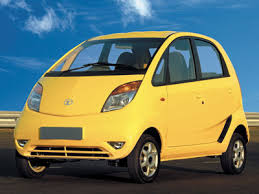
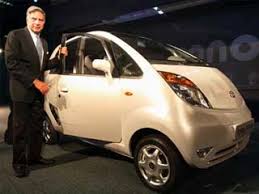
tata neno picture


Sunday, March 8, 2009

Tata Motors Will Launch Nano With Micro-Hybrid Version In India


Tata Motors is currently working on launching the world’s cheapest, People’s car on a micro-hybrid version to increase the fuel efficiency to cut down its emission.
Tata Motors is currently discussing with Bosch, the world’s biggest component supplier, for sourcing the technology that is already being used by Mahindra & Mahindra in India and other automakers

Cheapest Car in the World:TATA NANO: only 2500$


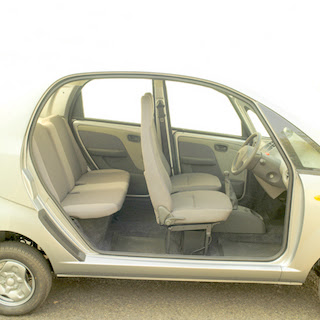
Hello everyone, Although this is a off topic post on this blog, but i cant keep myself in control about not to posting this news. Today here in Auto EXPO Delhi (India) Tata motors launched worlds cheapest ever car named as "TATA NENO" When this project started 3 years back, everyone in world says "THIS IS IMPOSSIBLE TO DO". Now Tata motors have created a history by launching the car. Here are quick specifications: Engine: 625 CC (4 gear manual transmission) Five Doors Sitting capacity : 4 People Power: 30 BHP Speed: 90KMS (maximum) I am also able to get some the pics of the cars for everyone of you. here they are

Share

Twitter Delicious Facebook Digg Stumbleupon Favorites More